
Bulk Rail Shipping Starts with the Right Railcar
Bulk shipping by rail can feel daunting whether you’re new to rail transportation or a seasoned professional. The process typically starts with the goal of finding lower priced alternatives to the current transportation solution or a party is seeking new markets for their products. Railcars on average move the equivalent of four truck loads. Railroads price shipments by the railcar so it’s imperative each loaded railcar is optimized in terms of capacity for the task at hand. When the wrong railcar is used, the price per ton for shipping can vary significantly.
Understanding Gondola Railcars
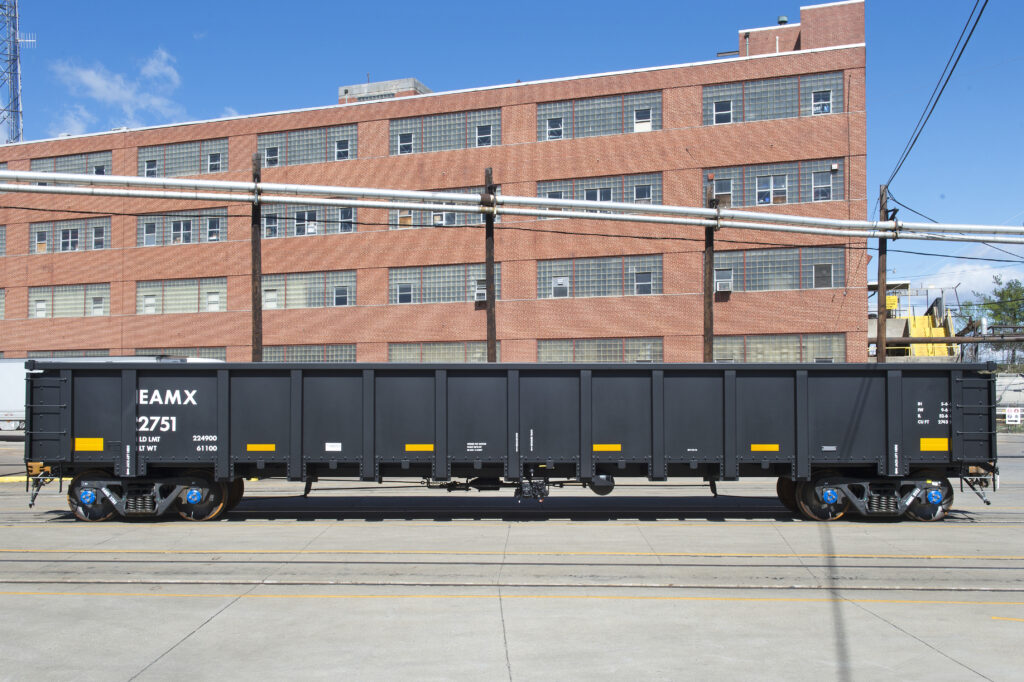
Standard 52’ Mill Gondola-2750 Cu Ft
Historically standard gondolas were like the picture above. The 52’ mill gondolas were the workhorse of this railcar fleet. If a shipper ordered a car from the railroad, it was likely this car spec was delivered to the loading site. As transportation costs increased over time, it became clear that a one-size-fits-all approach no longer worked for many shippers. The shipping cost per ton could vary too much if railcar optimization was overlooked.
Why Railcar Optimization Matters
ERS recognizes each gondola serves a specific purpose. That’s why our gondola fleet spans sizes from 2500-4400 cubic feet, offering shippers the ability to better match equipment to their product.
As a customer centric company, we developed a railcar pricing and optimization tool that helps shippers identify the correct railcar for their specific application. In the case study below, we will show how this tool helped a customer validate their decision and improvement shipment economics.
Choosing the wrong gondola size can materially increase shipping costs.
Case Study: Optimizing Gondola Selection
One of our long-term scrap customers was looking at retiring their older gondolas and upgrading to newer equipment. Their product presented a unique challenge– it was bulky scrap steel with an average density of 52 pounds per cubic foot.
Shipping Assumptions:
- The times between origin and destination (OD) pairs were 1.25 turns per month.
- The existing fleet of 10 cars was old but becoming unreliable.
Using our railcar pricing tool, our customer was able to apply the global assumptions below to calculate the costs per ton to ship their product in four different gondolas.
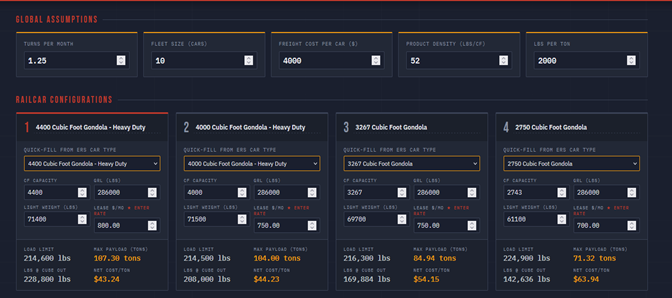
Our pricing tool is preloaded with our current fleet specifications. Our customer imputed the various lease rates into each car to correctly calculate their transportation costs. Although Railcar No.1 has a higher rental rate, the shipment costs per ton are materially lower than the other options.
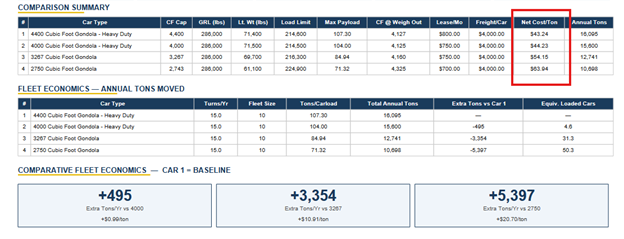
Although our customer understood some of the cost factors, the analysis confirmed the rationale and provided data-backed support for upgrading their fleet. The result was a move to ERS’s newly delivered 4400 cubic-foot heavy-duty gondolas, improving efficiency and long-term reliability.
About ERS
Founded in 2001 with just eight gondolas, ERS was built on the principle of delivering exceptional customer service. Today, our gondola fleet averages less than 10 years in age and ranges in size from 2500-4400 cubic feet, with multiple configurations available.
Shippers can use our railcar pricing and optimization tool at no charge to better understand how equipment selection impacts costs per ton.