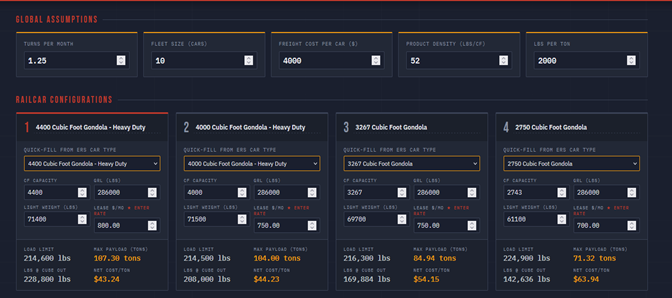
Start by entering the basic details of your railcar needs. This may include car type, quantity, expected lease term, and timing. These inputs help establish the framework for your pricing range. Railcar pricing is highly dependent on fit. Using the right car type and configuration is the foundation of an accurate estimate.
Step 2: We Account for Market Conditions
Railcar lease pricing isn’t static. Availability, demand, manufacturing timelines, and fleet age all influence the market at any given time. Our pricing tool factors in current market conditions to ensure estimates are grounded in today’s reality.
Step 3: Car Characteristics Shape the Range
Details like car age, design, capacity, and condition have a direct impact on lease rates. Newer cars and modern designs typically carry different pricing considerations than older equipment due to durability, maintenance exposure, and lifecycle expectations. The tool applies these characteristics to generate a realistic pricing range based on how similar equipment performs in the market.
Step 4: You Receive a Practical Pricing Estimate
Instead of a vague number, the tool provides a pricing range designed to support planning and internal decision‑making.
This estimate is meant to:
- Help you evaluate feasibility early
- Support budgeting and forecasting
- Reduce back‑and‑forth before meaningful conversations begin
Step 5: We Add Human Expertise
Every lease is different, and no tool replaces experience. Once you have a pricing estimate, our team is ready to review your specifics, answer questions, and refine options based on real‑world factors like routing, service requirements, and fleet availability.